
Painting With a Broad Brush

Before the election of Donald Trump, I never had ill feelings for Republicans. Most members of my family are Republicans as were both of my former spouses. Before Trump, I never voted a straight Democratic ticket. I voted for whoever was the best candidate for the job and acknowledged that several Republican politicians were true statesmen. While I did not agree with their political positions, I admired their intent, their patriotism, and service to their country.

Because of a recent conversation, I realize that I lost my objectivity and had become partisan to the point of tribalism. I started painting all Republicans with one broad brush. I attribute this in part to members of my family (several) who unfriended me on Facebook because of my criticisms of Trump- not the Republican Party, mind you, of Trump! Add to that the absolute partisanship demonstrated by Mitch McConnell and House under Paul Ryan, and I have become down-right biased. Lumping together all Republicans is as wrong and offensive as is grouping people by gender, race, religion or sexual orientation.

Not all Republicans support Trump. Not all Republicans approve of Congresses’ partisanship or Trump’s sycophants. Grant you, many of them believe Democrats are soft on border protection and think a wall is needed to stop illegal immigration. They may not understand that a wall is as outdated as the coal industry and often do not realize that what Democrats propose is better technology by way of scanners, helicopters, drones, and improvements in our legal points of entry. The wall, however, is beside the point. The point is that not all Republicans support Trump- not all Republicans think alike, and I must stop speaking as if they do.

I thank my friend for calling me out on my bias. Besides bringing attention to my bias, she succeeded in giving me hope that just possibly, members of the two major parties can agree to disagree and once again work together in a bipartisan manner. That time might not come right away. Tribalism did not start under Donald Trump, but this is where I get off the tribalistic bandwagon. This is when I return to accepting that Democrats and Republicans have different opinions and values and respect these differences, just like I do not share Muslim or Jewish beliefs but respect their rights to worship differently.

I cannot end tribalism in American politics, but I can stop painting Republicans with the same broad brush and accept that Republicans are as varied as every other group.   Ω

From My Heart: Grief

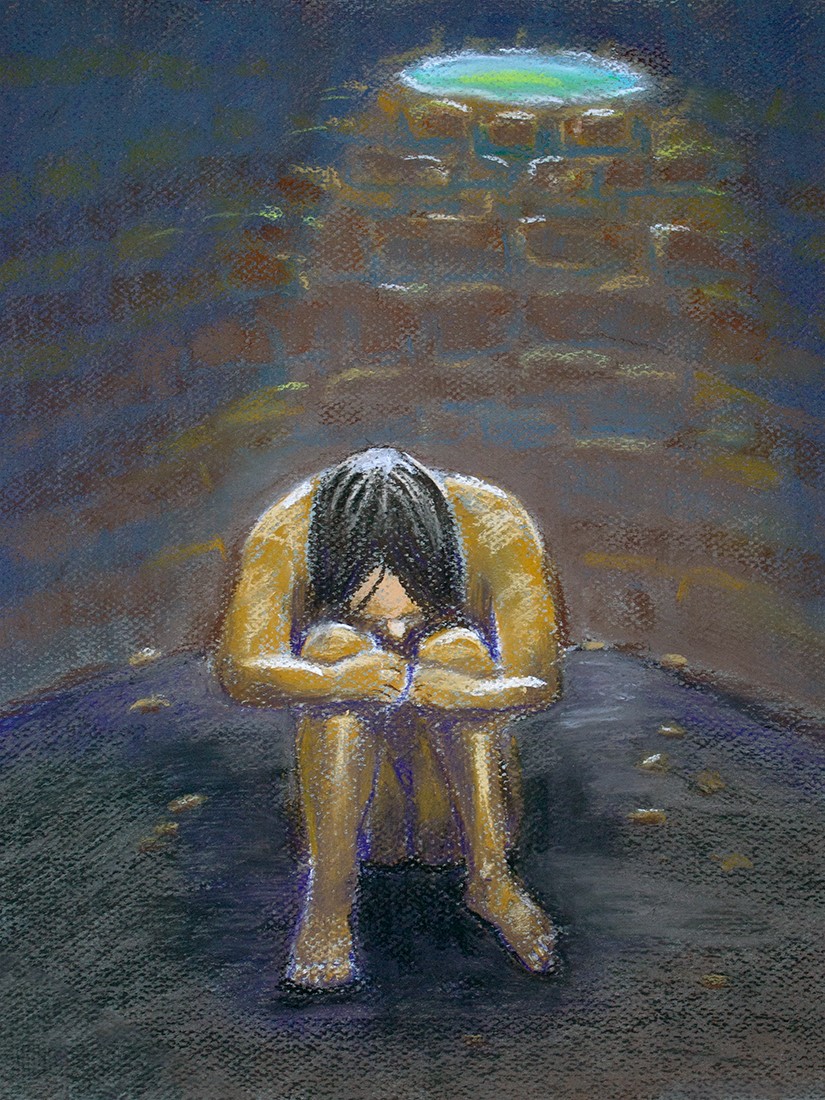
Grief is like a hole from which there is no escape.
With each loss, the hole deepens
And it becomes harder to claw one’s way back into the light.
Grief isolates the sufferer from loved ones,
As everyone must find their own way through the gloom
Back to acceptance and peace.

Karen and me.

Grieving is a part of life as much as is celebrating beautiful moments. I have recently mourned a great deal.

Losing my friend Karen two years ago was a huge loss. I endured that loss with little to no support from family and friends.

When I heard she died, I posted it to Facebook. My post enraged her two sons who wanted to tell their relatives in their own time on their terms. I am not FB friends with any of her family, and my post settings can be read only by my friends, so how could I expect that her family other than her sons would see the post? Her sons struck out at me viciously. I was excluded from attending her memorial service, and they cut me off forever. They have been a part of my life for over thirty years, and all of them lived with me at some point. I loved them. I was always there to do for them and gave them thousands of dollars over the years and even a car. That brought home another form of grief- grieving the loss of the living.

Karen’s death made me come to grips with my mortality. I resigned all my volunteer positions and took a trip to Indiana to reconnect with my own family. My relationships with my sisters in Indiana have always been a struggle. There were so many years when they refused to have anything to do with me- sometimes for decades. One would think that I had done something monstrous and cruel to be cut off like that by my family, but that is not the case. I have always loved them. They won’t tell me why, but in the past, they offered reasons. “I think that I am better than everyone else” because I completed college and went on to graduate school. All of us dropped out of school as teens. I chose to go back and educate myself. They made other decisions. When we were younger, I encouraged them to go back to school too. They resented what they interpreted was me “looking down on them.” No, I just wanted their lives to be easier! But I am off point. This writing is about grief.

Erin nesting in my pillows.

In November, my dog died. Truth be told, I put him to sleep. He was sixteen years old, deaf, and almost completely blind. He had become disoriented and suffered from loss of bladder control. I was his only attachment in the dark and empty silence that had become his world.  Other than his complete and unconditional love for me, he had no quality of life.  I had to let go- for him. I miss him terribly and cry as I write this. I loved him so! Losing Erin was a significant loss. My own life is so much emptier with him gone.

There is no one I touch- no one who touches me. There is no one to hold me or put their arm around me. I go months- years- without significant physical human contact.  My only physical contact with others comes two nights a month: when I meet with my Red Hat group or when I attend a flotilla meeting. I feel increasingly cut off from others, isolated and alone. Erin was not human, but we touched every day, and that touch reinforced my humanity, my ability to love and be loved. I am liked by a lot of people such as my fellow Auxiliary members and my Red Hat friends, but that is not the same as being loved by someone. After Karen died and I resigned my offices within the Auxiliary, they did not call to say that they missed me or ask how I was doing. We are associates and not friends.

There is another living person of whom I grieve the loss. A few weeks ago, my foster brother died. He was the same age as me. It stunned me. I had planned to attend his funeral and made airline reservations. I thought I would stay with my son and see my grandsons while I was there. My son declined to let me stay at his house. His wife did not want me there.

I have always had a tenuous relationship with my oldest son. Lies his father told him to which he continues to cling created the first problems. Jealousy of his younger brother made everything worse.  He called Tod my “Golden Boy.” Tod was more accessible to love, and Tod loved me back without resentment or reservation. Michael never loved me freely and without reservation. I spent decades walking on eggshells trying to fix what was never whole. Then, in about 2013 in a moment of pain and despair I said something so utterly hurtful to Michael that no matter how often or how sincerely I apologize, he and his wife will not forgive me. I have done everything I know how to repair the rift between my son and me. I must now accept that nothing I do or say ever will.  I grieve the loss of the son whom I dearly love.

What is it about me that others in my family find so completely offensive? Tod had his views. He said I intimidated others because I was like “a force of nature.” Tod thought neither he, his brother or my sisters could “measure up to me.” When I am not flailing myself for being a sinner, I dust off his words and cling to them.

No, I am not that big. I’m just that resilient, but even in my ability to pick up and move on, I feel my losses. It gets harder and harder, and I sometimes wonder if I can do it again or wonder why. I feel alone and isolated.  If I am not connected to others through love and affection, what is the point? To quote John Donne:

No man is an island,
Entire of itself,
Every man is a piece of the continent,
A part of the main.
If a clod be washed away by the sea,
Europe is the less.
As well as if a promontory were.
As well as if a manor of thy friend’s
Or of thine own were:
Any man’s death diminishes me,
Because I am involved in mankind,
And therefore never send to know for whom the bell tolls;
It tolls for thee.

“Grief is a like a hole from which there is no escape”

Christmas Then.

My sisters and I have very few photographs of our family and of our home at Christmas time. What we have are memories. I have the barest glimpse of a memory of one Christmas in California before I turned five, but what I remember of that event are the lights along the highways and the Christmas decorations along the streets as we drove to visit family? Friends?

marktI remember Christmas in Germany. We lived in an apartment that we shared with my grandparents who slept there at night but spent their daytime hours in an efficiency behind their store located on the bottom floor.  My mother and grandmother put up the tree on Christmas Eve while my oldest sister, Liz, took our two younger sisters and me to the Christkindl Market in Nurnberg. It was a different place and time, and a twelve-year-old was considered old enough to take small children across town on the city’s trolleys. We rarely had money to spend, but some Christmases we had enough to buy Lebkuchen or a hot drink. The real wonder of Christmas started after we returned home.

The tree was decked with hundreds of tinsel strands that my mother had painstakingly hung two or three strands at a time. All the ornaments were German or Hungarian blown glass more beautiful than any decorations one finds in stores today.  The lights- individual candles attached to the tips of the branches. What a glorious sight! We never saw electric lights until we moved to America. The trees I remember are the trees we had while living in Germany.

Ornaments

All of us children received presents but usually only one or two. Every doll I cherished as a child was given to me as a Christmas gift. I kept them for years. My dolls were more than playthings. They were my friends. They loved me, comforted me and never hurt me. One year, instead of a doll I received a stuffed bunny with a plastic face. After a momentary twinge of disappointment, I named her “Bunny,” and she too joined my circle of doll friends.

Some years we also received a new dress, jacket or mittens. Mother made many of our clothes. She was a professional seamstress, so the things that she sewed were often prettier and more well-made than store-bought clothes. When she could not afford new fabric, she repurposed the material from old skirts and dresses handed down by my grandmother or my aunt.

What I loved best about Christmas Eve were the cookies, the chocolate and the nuts and fruit we each received. There was always a chocolate St. Nickolas and oranges. As an adult, I still associate oranges with Christmas.

That was Christmas then. With all the wonder that only a child can experience I was enthralled. I never realized how poor we were, and it never mattered. It was Christmas, a magnificent time of the year.

Excerpt from “Through a Glass Darkly.”

OLH3.This is from a conversation with Mother Kevin, the nun in charge of the girls at Our Lady of the Highlands. It is significant because it describes how I felt not just on that day in 1964, but what continues to color my life 54 years later.
“Is something wrong?” She persisted. “You don’t look happy. I never see you smile or laugh. You always look so sad. What’s going on with you? You can talk to me now,” she urged. “I do care about you,” she finished, “and I can see how unhappy you are.”

I could not stop the tears from rolling down my cheeks and felt betrayed by my body. How dare my eyes weep? Her words touched the hurt deep inside of me and the feelings that I did not wish to acknowledge rose to the top. I felt pressed to talk about what I wanted to deny; that I could never escape my painful memories. They colored my existence much as ink dropped into a glass of water permanently changed it. These memories filled my mind during the long hours of silence and turned my dreams into nightmares. Sleep offered no refuge.

I wanted to die, but I could not say that to her. To commit suicide was to commit the unforgivable sin of despair against God, just like Judas after he betrayed Christ. Wanting to die was such a horrible sin that it only proved what an abomination I was before God and humanity. I could never, ever admit this to such a pillar of virtue! I was crying against my will and had to say something, and it had to be honest. I dared to withhold information, but I dared not lie to her.

I Dreamed About My Mother

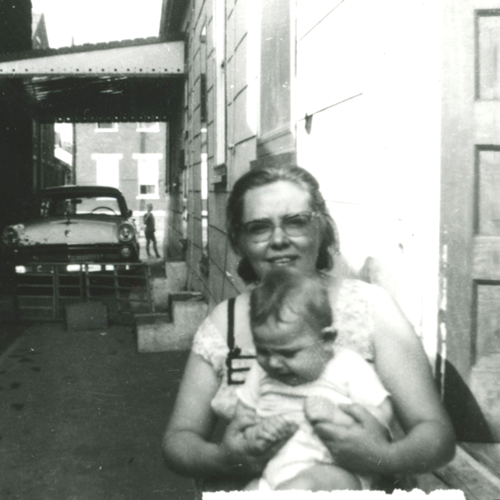
Mom and  Edna, 1962.
My mother and baby Edna, abt. 1962 at our home in Newport, KY.

The other night I dreamed about my mother. She has been dead for about 50 years, but as far as I remember that was the first time I dreamed about her. In the dream we were happy to see one another and she hugged me close. In my dream I felt love and relief.

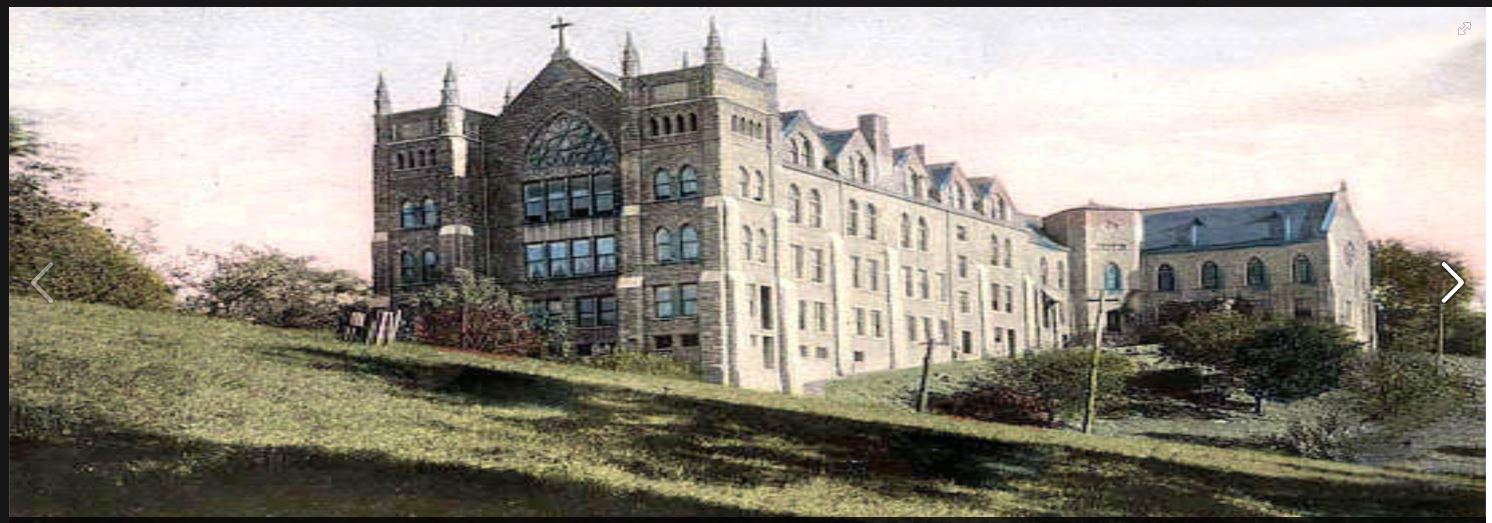
I loved my mother but our relationship was painful. She blamed me for reporting sexual abuse by my father and called me, “the little hussy who stole my husband,” or “the selfish tramp who broke up my family.”  I was not the only daughter my father abused, but my older sister denied the abuse. She said it was so as not to hurt my mother. The end result was that after my father went to prison, I was blamed and scapegoated. My mother turned cold toward me and my sisters dared not show me affection for fear that my mother would believe that they were taking sides against her. It was a hostile home environment and the county children and family’s social worker sent me to live at Our Lady of the Highlands, a home for girls in difficult predicaments like me.

Our Lady of the Highlands was no easier for me. While not diagnosed at the time, I had PTSD and suffered tachycardia and severe anxiety. The symptoms started by the time I was 9 years old, and doctors could not identify the reason. While at Our Lady of the Highlands the bouts of tachycardia were fewer, but I functioned by constantly fighting off panic attacks which meant my focus on the task at hand was always impaired.  In an environment that was rigidly regulated by a merit system governed by the clock that meant I was ever earning demerits for completing a task a minute, or even a mere 20 seconds behind my peers. Friendships were strongly discouraged due to the fear of homosexual relations. The hours of solitude left me locked in my internal emotional hell.

I do not, however, regret my years at Our Lady of the Highlands. I learned about morality and personal integrity. That was a foundation that I did not get from my family. I often thought everyone in my family lied for different reasons. Some lied to protect others from pain while at other times they lied to inflict personal pain. My father was the worst liar of them all. He even lied about his race, his name and date of birth and no, he was not hiding from the law! My dad simply made up stories about himself and his family and usually, they were self-aggrandizing. I had heard so many lies that I refused to be dishonest, and by the time that I was a young woman, I was described as ‘brutally blunt.’ Needless to say, I was lacking in social skills because not everything needs to be said just because it is true.

Members of my family continue to lie. They lie to avoid shame and recrimination. They lie to seek approval. They lie to rewrite their personal histories. They lie for the same reasons that they gave 50 years ago as well as some new ones. That means after all of these decades I remain the outsider. They do not want their lies confronted or their myths destroyed. I think all families do this to some extent. Mine is just extreme.

My mother was the most honest person in my family- when she was not drinking. Considering my mother’s experiences in Germany at the end of World War II, I am certain that my mother also suffered from PTSD. Her home was bombed by the Allies. She had been repeatedly beaten and survived a German firing squad. My mother had a silver pin in her leg where her femur was shattered by a bullet in that execution. At a time when PTSD was not recognized, I now understand that drinking was her way of drowning her pain. While I felt betrayed as a child, now I also understand why my mother chose to not believe me and to blame me. She was not a U.S. citizen and feared what would become of her and her children after my father was incarcerated. She had no means of supporting us and we skidded from below the socioeconomic poverty level into destitution while she herself slipped from depression to despair.

In my dream, there was no resentment or recrimination. There was only the warmth of being held by a loved one. Ω

The Color of America

Diversity
“Diversity” by Dorothy Riley

The current administration has by its actions made it clear that America should be predominantly white. It goes far beyond refusing legal entry into the U.S. to persons of other races and religions and it is more than its thinly concealed endorsement of white nationalists.

People of color living here legally for decades are being denied passports and being deported. These include American citizens of Hispanic origin living along the Texas border, Muslims and most recently, Vietnamese boat people and their descendants who entered this country beginning in the late 1970s. (These were the Vietnamese who sympathized or aided the Americans during the Vietnam war.)

When blacks protest unequal treatment by law enforcement, in education and other sectors, whites often respond with, “Go back to Africa if you don’t like it!” If this administration can find loopholes for deporting Hispanics and Vietnamese who have lived here legally for decades, they have no doubt searched for any excuses to deport blacks brought to America generations ago as slaves. It is no accident that President Trump directs many criticisms against Detroit. The city has the largest African-American population within the U.S.

By 2045, whites will become the minority population in America. Trump’s immigration policies are a vain attempt at social engineering to delay or alter that fact. White people fear to become the minority. They have for generations discriminated against minorities of all races. Will they suffer discrimination once the tables turn? This is already an oft-repeated complaint.

Whites becoming the minority race within our children’s lifetime is a reality. It does not lessen our greatness as a nation or our economic and military might. Diversity has always served as a source of strength. The best way to ensure that our children and their children do not fall victim to prejudice and racism is to stop discriminatory practices now. The surest way to level the playing field for our descendants is to teach our children tolerance and inclusion.

Diversity is a beautiful thing. It is up to each of us to promote its benefits not just to combat divisiveness in the present, but also to ensure the success of our children in the future. Ω


Hispanics denied Passports:

https://www.washingtonpost.com/world/the_americas/us-is-denying-passports-to-americans-along-the-border-throwing-their-citizenship-into-question/2018/08/29/1d630e84-a0da-11e8-a3dd-2a1991f075d5_story.html?utm_term=.6748e16e4c7d

Vietnamese Could Be Deported:

https://www.washingtonpost.com/world/asia_pacific/thousands-of-vietnamese-including-offspring-of-us-troops-could-be-deported-under-tough-trump-policy/2018/08/30/8de80848-a6d0-11e8-b76b-d513a40042f6_story.html?utm_term=.a2bf98eec759

U.S. to Become “Minority White” by 2045:

https://www.brookings.edu/blog/the-avenue/2018/03/14/the-us-will-become-minority-white-in-2045-census-projects/

The Last Great Statesman?

john-mccain-getty-02-1080x608-1

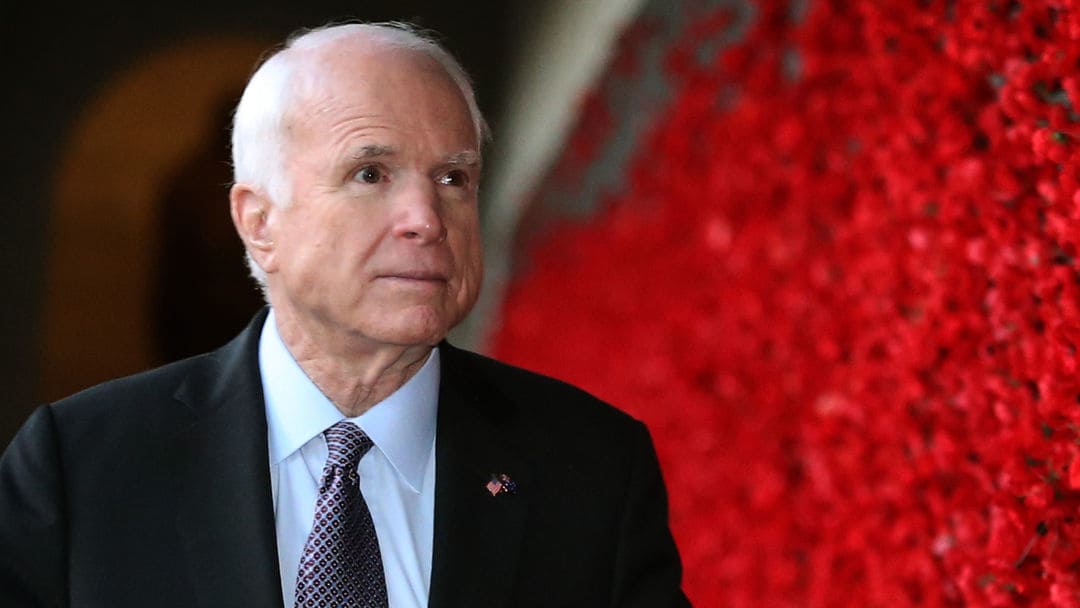
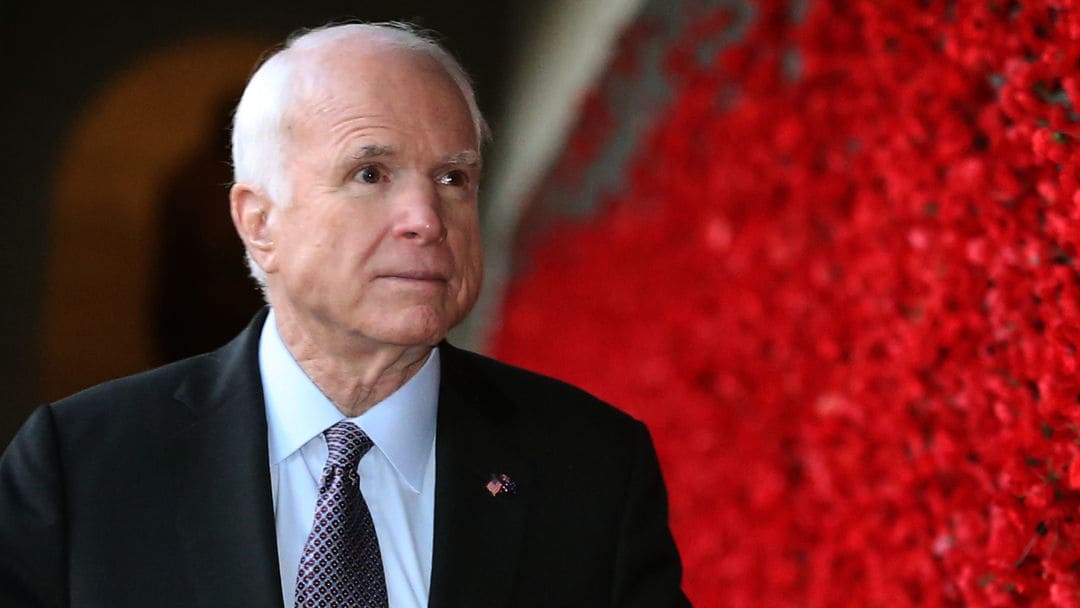
Today we say farewell to an American hero and a great statesman, John McCain. I did not share his conservative political views, but he was a man of honor and integrity. I never doubted his commitment to the people of this country or to the Constitution.

Where are those virtues on today’s political scene?  We have a president who lies incessantly and has destroyed the public trust in the nation’s intelligence community and the free press for personal gain. He and nearly every leader of his campaign is under investigation for fraud, tax evasion, representing foreign governments without registering, illegal campaign donations and the list goes on. * While this is likely the most corrupt administration in American history, I am not an idealist. I recognize that other administrations both Democratic and Republican have had their share of “crooks,” to borrow Nixon’s word.

I remember the Democratic Convention of 1968. I was in Chicago at the time for nothing related to the convention or the protests which spilled throughout the city, but I was caught up in one skirmish on the way back to our motel room. To this day, I bear a scar over my eyebrow where someone smashed a bottle into my face. (As an aside, I was similarly caught up in the anti-war demonstrations in Washington, D.C. in 1969, and again, my presence was unrelated to the protests going on.)

10857320_1015112485169054_437224584522597170_o

I remember the resignation of Richard Nixon in 1974 and the Iran-Contra scandal a decade later, and of course, I remember the attempt to impeach President Bill Clinton more than a decade after that. Our government has always been less than perfect.  “Power tends to corrupt, and absolute power corrupts absolutely. Great men are almost always bad men.”

What is different today? Until this administration, both the House of Representatives and the Senate were governed by ethical rules and procedures that maintained order and civility. Mitch McConnell, President pro tempore of the Senate, chose to change those rules without the required 60 vote majority, and Paul Ryan, Speaker of the House, has failed to provide leadership or reign in committee members of his party who egregiously violate norms and rules. The leaders of both bodies fail to speak out against the worst of the President’s actions thereby failing to provide a check on the presidency. There is no check or balance, the single reason why power was invested equally in the three branches of government.

There is no honor, no dignity left in government. It died with John McCain, the last powerful senator willing to stand up to the president and against his own party. I cling to a childish hope that enough legislators look around at what they have destroyed and choose to once again reclaim their integrity. Ω


The number of indictments and guilty pleas two years into the Trump administration:

https://www.washingtonpost.com/news/politics/wp/2018/07/13/a-summary-of-the-fruit-of-the-mueller-investigation-to-date/?utm_term=.0cc01b0667b1


Inner-city Violence

09_Legends South

Recently, I saw a meme about the 72 people shot in Chicago. I cannot quote it verbatim, but it said that they were not brown people trying to cross the border illegally; that they were black American citizens in Chicago so LIBERALS can go back to not caring.

While the entire point of the meme was to besmirch Democrats/liberals, what struck me was how something as terrible as inner-city violence was used not to express outrage over conditions within big cities or compassion for those who lost a son, a brother or father during that bloody weekend, but only as an attack on ‘liberals!’  As a social worker, I worked in inner cities, and I have some understanding of how people living in these pockets of poverty perceive the world around them and how they feel.

Chicago has the third largest public housing agency in the country. They have come a long way toward removing the huge apartment complexes that housed hundreds of families to invest in two and three unit buildings. Building smaller units has dropped the people to space ration from 75-90 persons per acre to 40-50 persons. An acre as a unit of measure may sound vague, and as offering a point of reference, a square acre measures 208.7 feet x 208.7 feet, or at 50 people per acre, each person has the equivalent of a little more than four feet of living space!

Housing units go on for blocks and stores, and other businesses are rarely located nearby. Residents of these Chicago neighborhoods have fewer privately owned vehicles, but the city has a great public transit network. Can you imagine bringing home a week’s worth- let alone a month’s worth of groceries on a bus? People less likely able to afford it are forced to pay friends, taxis, and ubers for rides to shop for necessities like food or school clothing or to keep medical appointments.

People unfamiliar with these populations erroneously assume that these families subsist solely on welfare. Most of the heads of households are employed albeit at minimum wage or low-paying jobs. The reduced wage makes them eligible for housing assistance, and many families cannot get by without subsidized daycare, Food Stamps, S.N.A.P., government-subsidized health insurance programs like CHIP and other safety net programs. Families that subsist on Aid to Dependent Children programs are worse off.

Education is the path out of dire poverty, and Chicago prides itself in a public school system that takes advantage of every resource possible from hiring good teachers, offering various after-school programs, day trips to expose inner-city children to other cultures and experiences, and to a social media campaign. What competes against all of their efforts is innercity gangs.  What gives the gangs such a strong grip on Chicago residents?

Living conditions are comprised of physical and emotional space, and the absence of hope dominates the emotional space. They have nothing to look forward to, and their living conditions are not likely to improve. Drugs, guns, and gangs rule the streets. These communities have troubled relationships with Chicago P.D. They see police commit violence against minorities and witness black men killed at an increasing rate.  They feel marginalized by the rest of society and fear that their voices are not heard. They are often degraded and shamed by employees of the agencies they need most to survive and are treated like welchers. They face an endless cycle of poverty, feel hopeless and helpless, and that sense of helplessness is what encourages young men to join gangs. Gangs represent a form of power.

Gang wars are about turf. Gangs encroach on each other’s neighborhoods or “turf” to extend their power and to increase revenues. That gang retaliates by killing their invaders, and the invaders retaliate by killing more of their rivals creating an endless cycle of killings.

We cannot impact inner-city murder rates without changing the environment. We must first restore hope and opportunities.  The Trump administration is cutting desperately needed aid such as housing assistance, CHIP, food stamps, etc., which will only make living conditions direr and increase the helplessness that drives young people into a life of crime. Restore assistance to working low-income families and create opportunities to escape the cycle of violence. That will do more to curb violence than calling out the National Guard.  Ω

Journalists Matter!

When talking about news reports, as soon as people start to throw out phrases like “fake news,” liberal brainwashing,” liberal media manipulation,” I suspect that the person knows nothing about journalism, journalism education, news reporting or news ethics. It is akin to calling doctors shamans because one does not understand the extent of medical training doctors receive or the Hippocratic oath that they take. The misconceptions in news reporting may in part be to the rise in television news commentators, most of whom are TV personalities and not trained journalists, not understanding the difference between news and opinion articles, and a president who denigrates journalists at every opportunity and calls them “the enemy of the people.” Trump, however, has both an agenda and a lack of understanding about the field.

Journalists are trained carefully in every genre published in newspapers and periodicals. A news article has specific criteria for both structure and content, and it must be factual and backed up by documents or reputable sources. (Donald Trump knows this well because he has in the past sued major newspapers for publishing what he alleged were false statements about him.) When newspapers publish incorrect facts, they either follow up with retractions or corrections.

Newspapers also print opinion pieces. Most newspapers place opinion pieces in a separate section. In some cases, the author’s name indicates it is an opinion piece as many of their authors are regular columnists.

Television news commentators are separate from printed news sources. While many commentators are trained journalists, personalities who host daily shows on news networks often offer more opinion than facts while local nightly news broadcasts usually lean more towards facts.

Code of Ethis
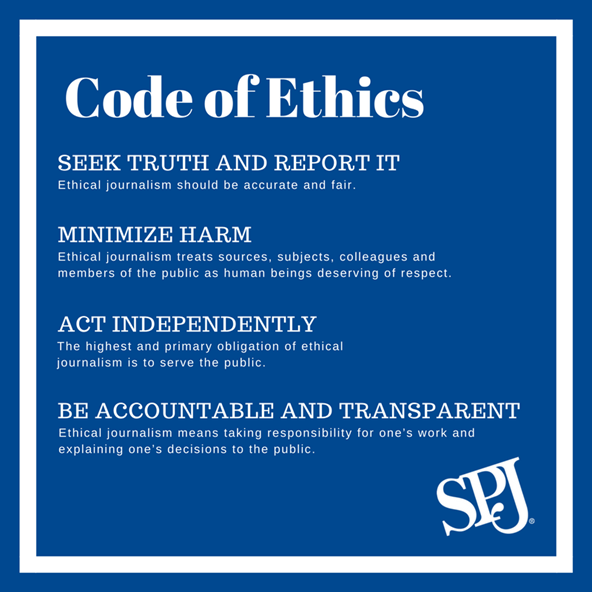
Society of Professional Journalists Code of Ethics

Journalists do not take a Hippocratic oath, but they are professionals guided by a code of ethics. The preamble states: “Members of the Society of Professional Journalists believe that public enlightenment is the forerunner of justice and the foundation of democracy. Ethical journalism strives to ensure the free exchange of information that is accurate, fair and thorough. An ethical journalist acts with integrity.

The Society declares these four principles as the foundation of ethical journalism and encourages their use in its practice by all people in all media: 1.) Seek Truth and Report It, 2.) Minimize Harm, 3.) Act Independently, and 4.)  Be Accountable and Transparent.”

You can find the Code of Ethics of the Society of Professional Journalism here: https://www.spj.org/ethicscode.asp

Stop denigrating journalists. Learn what it is that they do and why they do it. In 2017 alone, their commitment to truth caused over seventy journalists to be murdered or killed worldwide while reporting, covering an incident, or because of their status as a journalist. Journalists deserve better. They truly are the guardians of our democracy.

List of journalists killed in 2017: https://en.wikipedia.org/wiki/List_of_journalists_killed_in_2017

Note: I am not a journalist. I am a citizen who appreciates honest reporting.

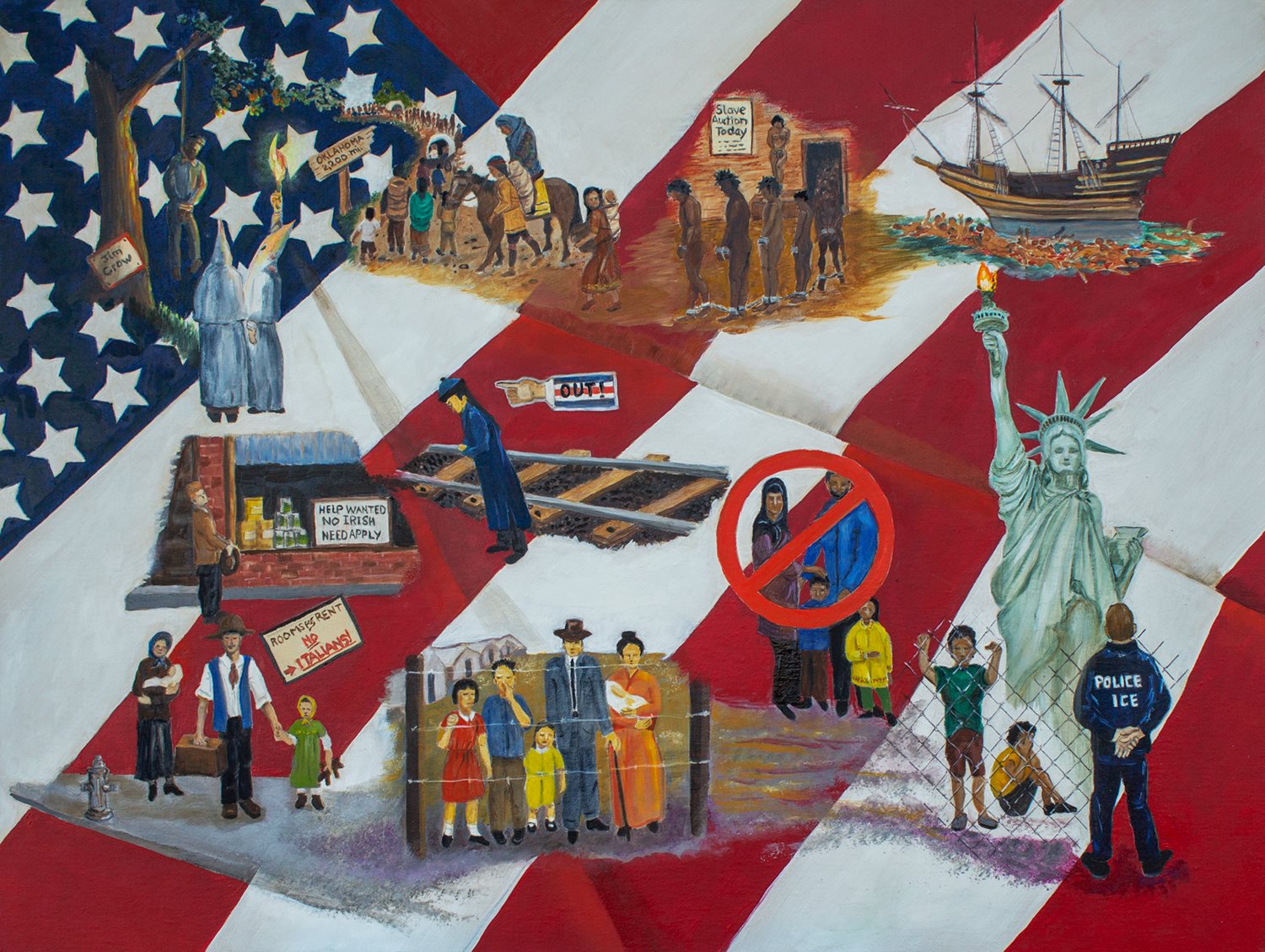
Coming to America

37863169_2224779260869031_5184011430189334528_o
Coming to America, oil on canvas by artist, Dorothy J. Riley

Our history of immigration is checkered, at best. The flood of settlers from Europe at the turn of the 17th Century destroyed thousands of Native Americans and their villages. We then imported thousands of slaves from Africa and other places but they and their American born offspring were not counted as citizens. The remaining Native American peoples were forcibly evicted from the Eastern coast in 1830 by Andrew Jackson and Martin Van Buren to make room for white settlers. The Indian Removal Act is better known as the Trail of Tears.

While the Civil War freed the slaves, African Americans continued to be treated as second class citizens supported by discriminatory policies in education, housing, and voting restrictions. Jim Crow practices served as a constant reminder that white Americans believed African Americans inferior.

Irish and Italian immigrants were not wanted because they were often poor when they arrived on our shores, but mostly because white Protestant Americans feared the influx of Catholicism. The Irish were in fact, considered less “valuable” than slaves as laborers and were used for constructing the canal in New Orleans were the high rate of death made it too “expensive” to use slave labor. It is estimated that between 8,000-20,000 Irish laborers died building the canal.

Kilkenny cross-NOLA
Kilkenny Cross in New Orleans honoring the thousands of Irish immigrants who died building the canal.

We then imported thousands of Chinese to build the Transcontinental Railway.  (One of my previous posts.) When we no longer needed their labor, we sent them back to China and banned Chinese immigrants.

Our next target were the Japanese during WWII. To quote Wikipedia, “The internment of Japanese Americans in the United States during World War II was the forced relocation and incarceration in camps in the western interior of the country of between 110,000 and 120,000 people of Japanese ancestry, most of whom lived on the Pacific coast.”

Most were U.S. citizens, many were born in the U.S., owned property and businesses, all of which was confiscated by the government.  Many were paid for their lost properties but the compensation was far less than 10% of the actual value. Call it what you may, they were imprisoned for the crime of being Japanese or of Japanese descent.

Two other noteworthy acts of discrimination occurred, both recently under the administration of Donald Trump. The first of these was the “Muslim Ban,” allegedly, to deter terrorists from reaching our country. Trump’s first attempts to ban Muslims were struck down by the courts, but after repeated attempts and by changing the language of the executive order, the last attempt succeeded. Strangely enough, Saudi Arabia was not on the list of banned immigrants despite 15 of the 19 persons who attacked our nation on 9/11 being citizens of that nation!

The most heinous act was the removal of over 2,500 children from South American families seeking asylum in our country. A court overruled the separation of families, but many parents were deported without their children and hundreds of children are waiting to be reunited. Worse, many of the children who were returned had body lice, were dirty, malnourished, were physically and sexually abused and severely traumatized. The photos of these children kept in chain-link cages is what inspired my painting, “Coming to America.”  How could we do that?

Parents Deported Without Their Children.

I wrote a poem about immigration:

Unwanted Immigrants

Riley, O’Malley and O’Shea-
Remember when you were not welcome on these shores?
Ricco, Ferrari and Rizzo-
Remember when to you they closed the doors?

Wan, Wong, Chang and Bay-
Once you were cast out from this great land.
Kobayashi, Nakamura and Ito-
You were dispossessed; sent to internment camps.

Azikiwe, Akintola and Cisse,
Your owners took your names and gave you theirs,
Like property, you were auctioned off and sold,
Not white, not equal you were told.

Rodriguez, Gonzales and Lopez-
You are now much reviled and held at bay,
How quickly they forget not long ago,
It was they regarded as the foe. Ω