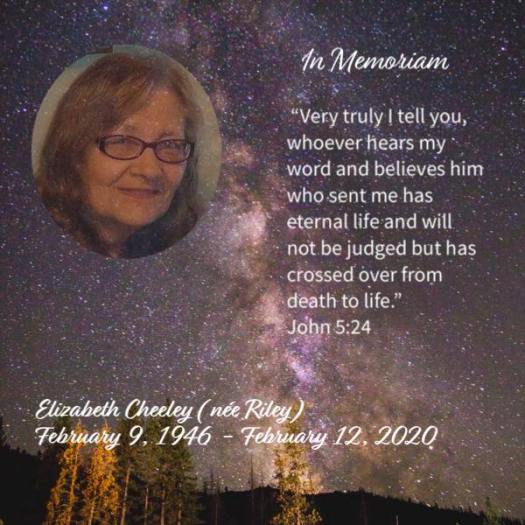
My sister, Liz died this week. Her death made me think about our family and how fractured it is, so I wrote this poem:
We were broken.
We were children brought up with abuse, lies and recriminations.
We were humiliated, put down and made to feel shame,
We were blamed for the failures of our parents
And made to feel responsible for their emotional contentment.
We were pitched one against the other and never learned to unite.
The accusations we internalized as children
Stayed with us until the bitter end.
We were broken.
We played roles,
But we were all too broken to play any of them well.
One became the Caretaker, but her own youthful needs stood in her way.
One became the Scapegoat, but her endless fight against this label
Only set her up for more blame and reproach.
One became the dependent Baby whose needs could never be met
By siblings too self-absorbed and lacking any sense of self-worth.
We were broken.
One became the Instigator who perpetually stirred up discontent.
And the parents who defined us? They stood on their pedestals even after death
With their long-gone but still audible voices directing the play.
Never criticize them. Never blame them. Never speak ill of the dead.
We were their victims and we were broken-
Too broken to unite and lift each other up.
Ever fragmented and tearing each other down.
We are broken still today.
Liz was a Christian, and I wonder how she reconciled the turmoil and divisiveness within our family to her beliefs? One way was by Gaslighting and rewriting our history. In the end, we must all cope somehow. Farewell, Liz. Hope you are blissfully reunited with your daughter.
My family relationships are complicated, but then, that may be true for most of us. I have five sisters and am close to only one, the youngest. I get along OK with the next youngest, but her life is problematic, and I may not be her most sympathetic listener. She struggles with an addiction to pain pills, the same affliction that robbed my son of his life. My efforts to encourage her to seek treatment has succeeded in making her avoid talking to me.
My mother, Sofie, had five daughters, the youngest of which is institutionalized for severe brain damage. My mother had Pleurisy while pregnant and in 1960, doctors did not fully recognize the threat of x-rays to a developing fetus. The sister to whom I refer as my youngest, Linda, has a different mother.
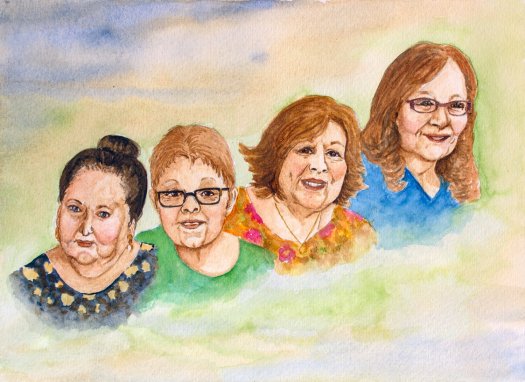
With my other two sisters, Marie and Liz, my relationships are often either strained or estranged. If they had to list which of their sisters they got along with the best, I would place at the bottom of their list. Strangely enough, none of them (Sofie’s daughters) have a relationship with Linda, and I cannot explain why. Her name would not appear on their roll of siblings.
Members of my family treat me like a pariah. That too, I do not understand. I have never done any of the truly hateful and hurtful things to them that they have done to me. My oldest son has not called me in years to say hello while his wife never speaks to me at all. I took this up with my therapist more than once because it hurts me deeply, but I don’t like where it always ends up. Could my sisters honestly be envious of me? My son, Tod, thought so. Tod always said that I was a tough act to follow. I accomplished much in my life and did it despite substantial childhood setbacks. I survived sexual abuse by my father, an alcoholic mother who rejected me, foster homes, and institutions. Yes, I have significant failings. I am damaged. I suffer from Post-Traumatic Stress Disorder, and I do not know how to build and maintain healthy relationships. My daughter-in-law calls this “just a poor excuse” for not being a better mother, but her opinions about my mothering skills came from my son, Michael. He envied and resented his younger brother and called him my “golden boy.”
Without the love and support of my family, I seek validation of my worth as a human being in the things that I accomplish. I earned a Master in Social Work when none of Sofie’s other daughters graduated high school. My sisters resented me for that. For decades, I had to listen to the incessant refrain that I think that I am better than them, and now, I am called one of the “educated elitists.” Sigh!
Thanks to my education, I held better-paying jobs and lived in better neighborhoods. My worst nightmare was that my sons would end up living the life of poverty that I worked so hard to escape. Those fears were unfounded as both of my sons did well. I own two houses, or should I say, I carry mortgages on two! I am in debt, but I have savings as well. Having more money would be a nice thing but my income exceeds my expenses, and I live comfortably. I mention my finances first because this society measures success by our means.
My art has brought me other measures of success. While I am self-taught and most of my work is mediocre at best, I have managed to get a few paintings accepted into museum collections and earned several national public service awards. As a member of a national military affiliated volunteer organization, I received numerous honors as editor and graphic design artist. I need this validation. You see, without the love and support of family, I constantly doubt my worth. I would gladly exchange all of my awards for a family that loves and cherishes me.
My son, Tod loved me dearly, but he is no longer living. I am grateful beyond words to my sister, Linda and her family because they do love and appreciate me. I love them dearly too. For obvious reasons, I am closer to Linda’s daughters than I am to my grandsons. I wish that were not true, but it is. I take comfort in knowing that no matter how estranged Michael is from me, he is a great father to his sons. I wish that I did not feel so alone and isolated, but life goes on. Ω
This year’s hurricane season has been awful! Houston was slammed by Harvey in August and sustained severe flooding. Houston received up to 52 inches of rain in just a few days. A month later, Irma wound up the Caribbean and was forecasted to travel up the west coast of Florida. It was one of the biggest storms on record: over 3oo miles wide with wind speeds up to 175 miles per hour; and as I write this and less than two weeks later, Puerto Rico is presently under assail by another category five storm, hurricane Maria.
I planned to stay home during hurricane Irma and hope for the best, but a friend talked me into evacuating. Of course, all of my Facebook friends were urging me to do the same, so the choice between facing down a possible direct hit from a category five hurricane versus leaving along with 7 million other Floridians was an easy one. Evacuate.
The highways were packed by 7 million evacuees
New Orleans trolley ride
Fortunately, I only sustained downed tree limbs. The larger ones were caught in the tree.
Breakfast at the hotel
The drive out of Florida was arduous. The highways were packed and until we reached Tallahassee, for many hundred mile stretches at a time, we could drive no faster than 25 miles per hour. By midnight we looked for a rest stop to sleep a bit and recover. At the first rest stop I had a wonderful experience; a Déjà vu of memories more than fifty years ago when things like Woodstock, love, and peace reigned. Dozens of people representing every age, gender, economic status and many races stood in groups sharing their experiences. A white man in designer clothing was talking to a Latino wearing faded jeans and a worn shirt. A young woman with several tired and cranky children allowed an old couple to share treats with their children and speak words of comfort to them. The storm was a great equalizer. Skin color, income, and education level did not seem to matter to people sharing a common threat. Unfortunately, George thought this rest stop was too bright and loud and believed that he would not be able to sleep, so we moved on to the next rest area.
One more thing. Florida state troopers (Florida Department of Law Enforcement) patrolled the rest stops, welcomed evacuees to stop and sleep, and directed cars to available parking spaces. They were kind and helpful. In addition to the standard restrooms, every rest stop had many portable toilets set up to reduce wait times.
Finding a hotel room was as difficult as the long drive. Millions of evacuees meant that there were no hotel or motel rooms available in Alabama or Mississippi. We ended up driving all the way to Metairie, Louisiana, a city about ten miles from New Orleans.
Two days later, we drove back home. Many gas stations had either no power or no gas, and the traffic was heavier than when we exited. I was fortunate. The storm veered east. Tampa was not hit by the eye of this storm but suffered only strong winds and heavy rains. I sustained just a few broken tree limbs. While we lost power in my neighborhood, it was back on by the time that I got home.
There are so many other things that I do not know how to talk about. I received a lot of love and support from family members, and I keep wondering why my son never called or texted me to make sure that I was ok. Before we evacuated, I asked to talk to my grandsons, but my son replied by text that he was too busy with meetings and soccer to arrange that call.
Yesterday was Tod’s birthday. He is my youngest son who died nine years ago. I miss him. Tod cared about me and often called me “just to talk” and to let me know what was going on in his life. He enjoyed talking to me and sometimes called for no reason other than to relay a story he knew I would enjoy. I know Tod would have called me before Irma because in 2004 when Florida had four hurricanes, my son came to stay with me to make sure that I was ok. Storms are traumatic events and many times these past weeks, I thought about him. Happy belated birthday, Tod! Fair winds and following seas.
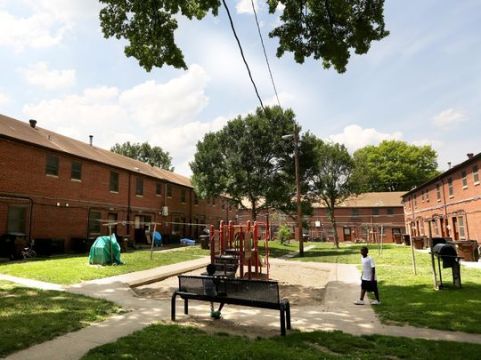
While we were always a low-income family, after my father went to prison, we became destitute. My family moved to Peter Knoll Homes, a housing project in Newport Kentucky. These projects were built at the confluence of the Licking and Ohio Rivers and were prone to annual flooding. My mother received a meager child welfare allowance and food commodities to feed us. This was years before food stamps and commodities included foods like wheat and corn flours, butter, cheese, dried beans and canned meat. Our mother sold the cheese for extra cash, and we frequently went to bed hungry. She also spent most of the monies intended for clothing and her children’s other needs drinking in the local bars.
My mother resented and punished me for “breaking up our family.” Somehow, it was not my father’s fault for abusing me. It was my doing for reporting the abuse to the county child welfare worker. It was all my fault and my mother and older sister, Liz, reminded me frequently. A local boy who was dating my sister raped me. That was “my fault” too.
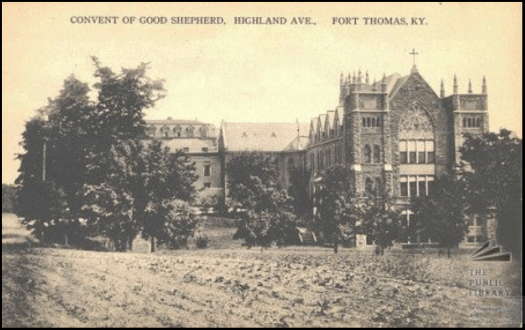
After years of chronic abuse, I suffered from what I now know was Post Traumatic Stress Disorder. I suffer to this day. I was timid, anxious, depressed, and my affect was flat. I lived in a state of isolated terror and frequent tachycardia. Just before I turned 13, the child welfare worker understood how critical my situation was, and she placed me in a school for girls, Our Lady of the Highlands in Fort Thomas, Kentucky. I never again lived with my family, and over the next few years, my mother had all of her children taken from her.
Our Lady of the Highlands, Ft. Thomas, KY
At Our Lady of the Highlands I did not have to fear physical or sexual abuse, but no matter how hard I tried, I could never be like the other girls. I was too slow making my bed, brushing my teeth, getting dressed; tasks we had to complete in firmly enforced time limits- and in complete silence.
The silence felt like a protective shroud. If I did not say what I thought or felt, it could not be used against me. In the three years that I was at Our Lady of the Highlands, I did not make a single friend. Of course, friendships were discouraged for fear of the girls forming homosexual attachments. We also could not talk about our lives or experiences before we came to the school. That was fine with me because I feared that if they knew what had happened to me; if they knew about the sexual abuse or the rape, then they might think I was worse than trash. I felt sullied, unclean and tarnished. How could anyone ever like or love me if they knew the truth?
After three years, I entered a foster home in Ohio. I was fifteen, and for the first time, I could be just another teenage girl. Next door lived the foster mother’s sister-in-law and her four children. Their daughter, Judy, whom I thought of as a cousin taught me how to dress, how to dance, how to laugh. We would sing to Martha and the Vandellas and other songs. The months chumming with Judy and her brother Randy were some of the fondest memories I have to this day. My happiness, however, was short lived. I danced with a black boy at the school homecoming dance and was suspended for a day while the school notified my guardians.
Right after that, I was awakened one morning by my foster father before anyone else was up and told to pack. He loaded me into his car and drove me back to the child welfare office in Newport. I was not permitted to say goodbye to anyone. My foster mother was ill, and I did most of the cleaning and cooking. I did everything they asked of me. Why? Was I impossible to love? To trust? I was devastated.
I was sent to live with friends of my mother and father in Pennsylvania. The wife, whom I will simply refer to as Aunt F, was never happy with me or with my sister, Marie, who also lived there. I no longer made straight A’s in school. I came straight home from school every day and Marie and I cleaned, washed, folded clothes, in short, did all of the housework for a family of five not including me and Marie. It was never enough, and Aunt F frequently grounded us for slight infractions of the rules. I lived with the family for two years, and that did not end well either.
I did have a boyfriend, a boy from my Aunt’s church. We were permitted to go to the movies twice a month with an early curfew, but once again, I did not have any friends. Friends got together after school or on weekends, visited each other in their homes, but I was not permitted that luxury. I had housework to do.
Me and boyfriend, Billy in 1968.
I was submissive, obedient and rarely complained. I feared that if I misbehaved, I would be put out again. My instinct was right. I lived with that family when my mother died.
On the day that my mother died June 1968, my sister and I were grief struck, and Marie did not want to eat dinner. Aunt F insisted that she eat, and Marie answered, “I don’t want to. I’m not hungry.” Aunt F slapped her across the face and screeched, “Don’t you ever talk back to me! Now do as you are told!”
I don’t know what came over me, but I jumped up from the table, grabbed Aunt F by the throat, lifted her off the floor and pinned her against the refrigerator. I did not raise my voice and said quietly but emphatically, “Her mother just died! If you ever touch my sister again, I will kill you!” In a surreal way, I can still picture her feet kicking frantically above the floor.
Uncle B calmed every down, and I was amazed that Aunt F and Uncle B did not punish me for what I had done. Aunt F avoided speaking to me for weeks, and when she did, it was to tell me that she was sending me to Indiana to live with my father. My father? The same man who had abused me?
That marked the end of my teenage years. When I arrived in Indiana, I had to quit school and get a job to help support my family. Marie came to Indiana too. Liz, my older sister, lived with my father already. She was pregnant and insisted that at five months, she was too sick from pregnancy to work. My dad earned $1.60 an hour, not enough to support a family of four, so it was up to me to get a job.
No school dances for me. No Martha and the Vandellas or Beatles. I worked until that arrangement too fell apart. These were my teenage years.
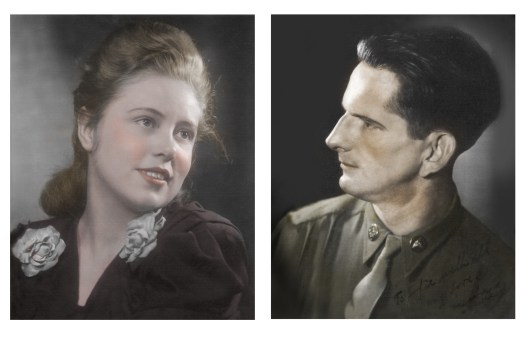
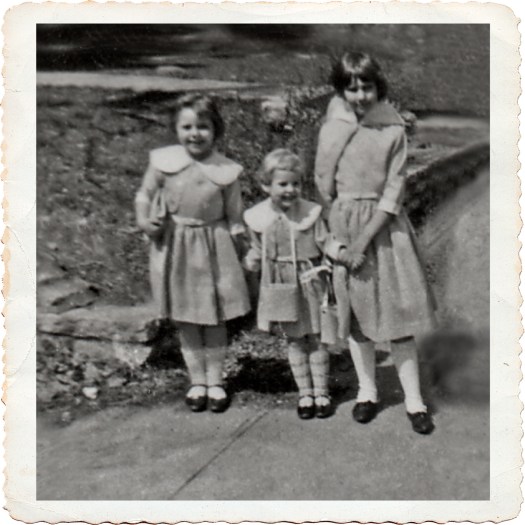
Sofie Schneider and Harry Riley mid 1940’sMarie, Erika and Dottie Riley, 1960, Cincinnati, OI never talk about my parents. They were a disappointment, but more than anything, I feel deeply sorry for them.
My father never knew his mother or anything about her. Where memories should have been, my father filled the holes with fantasies and confabulations. My father wove myths, lies, and fantasies throughout his life. I knew that as a child but had to relearn that lesson several times as an adult. I could write pages detailing the numerous tales he told, but that is not the focus here. Self-deception is how he coped with conflicts and inflated his wounded ego.
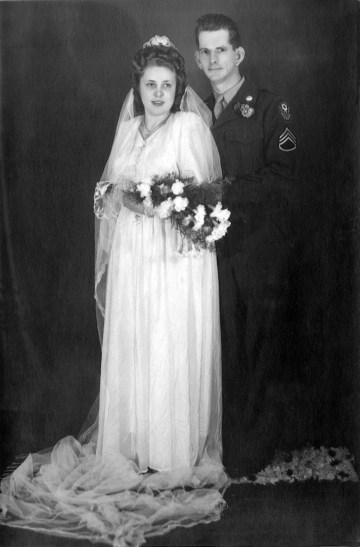
My mother was the oldest of two children born in 1925 to Elizabeth and Otto Schneider, residents of Nuernberg, Germany. At nineteen years old she married Erich Ansteeg, reportedly a member of Hitler’s SS. My mother said he was cruel and violent. They divorced a little more than two years later. Less than a year after the divorce, during the Allied Occupation of Germany, she married thirty-two-year-old Staff Sergeant Henry Riley, a member of the U.S. Army. In a war-ravaged country with no luxuries available, my mother, a talented seamstress, sewed her wedding gown out of a silk parachute that my father got for her.
Ansteeg fathered my oldest sister, Elizabeth. Liz suffered from polio, and my mother turned to Harry (Henry) for medical treatment that was unavailable to German citizens. Soon after their marriage, the Army transferred Sergeant Riley back to the U.S.A. with his new family, and sometime after that, he was discharged.
I know from talking to my (second) cousin that my father took his family back to Newport where they briefly stayed with his cousin. They disappeared without explanation. Gordon got up one morning, and my father and his family were gone, and his parents and aunts and uncles refused to talk about it. That was the last time my cousin saw or heard from my father (his first cousin). When we talked about it many years later, Gordon and I could only speculate about what might have happened. My guess is that he was caught sexually abusing Liz or one of the younger children.
Harry reenlisted in the Army in 1950. Over the next few years, he was stationed in the San Francisco Bay area where Marie and I were born, and Ft. Huachuca, Arizona. He re-enlisted in the Army Reserves and was stationed in Germany after my grandfather suffered a severe heart attack. My sister, Erika was born in Nuernberg. Upon his return to the U.S., Harry was still enlisted in the Reserves assigned to Fort Campbell, Kentucky.
Funny thing. When we returned to Newport in the 1960’s, my father always insisted that he had no family. I discovered decades later that we had cousins and their families living just a few blocks from us! I cannot explain that.
My father worked as a janitor and maintenance man. He had a full-time day job and worked nights cleaning offices. Even with two jobs, we barely scraped by. We did not have a telephone, but someone had given my father a black and white TV set with a snowy image. That TV with its rigged antenna held a central position in our living room.
My father’s poverty must have been a bitter disappointment to my mother. She came from an affluent German family who managed to hold on to their business until 1944 when the Allies bombed it. After the war, my grandfather became quite wealthy as a painting contractor and rebuilding Germany made that a most lucrative enterprise.
Mom could never accept her diminished social status. She didn’t lie like my father, but she bragged about stupid things to the point of embarrassing us. Her most frequent boast was about how we were going to be millionaires after our grandparents died. Mom had no way to foresee the events that would unfold between 1963 and 1968. She never experienced anything during her last years except pain, humiliation, and bitter poverty.
In 1963 I reported the sexual abuse I suffered by my father. My mother did not believe me even after my father confessed to ‘carnal knowledge with a minor.’ My mother became cruel and degraded me. My mother encountered a former friend while standing in a checkout line in a grocery store. She said to the friend, “That’s the hussy that lied about my husband.” I was but twelve years old. Other times, she referred to me as “the hussy who stole her husband.”
After my father went to prison, my mother quickly turned to drink, and severely neglected her children. We were eventually all placed in foster homes and institutions. My mother followed her new man to Pennsylvania where she thought she had friends and where she died June 23, 1968, of a heart attack. She was only 43 years old.
My mother had several harrowing war experiences, but these too are fodder for future stories. She was not evil. She simply could not cope with the consequences of choices that she made under very trying conditions, and her brother and parents were no help. As far back as 1959, Mom wanted to leave my father, but her parents would not hear of it. Of course, they had no way of knowing what he was doing to their granddaughters, and I doubt if my mother would ever have admitted the truth to them. More than anything, I pity my mother.
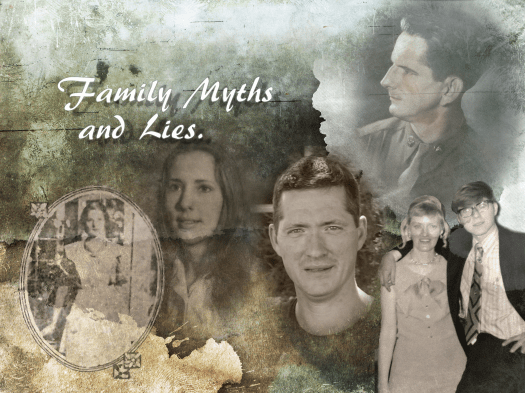
My family is rife with myths bordering on alternate realities. Some people might think the stories they repeat are lies. Until recently, I did too, but what is a lie? Anything that is not true, not factual? That is an over-simplification.
Take a look at the current political climate. People firmly believe in candidates and positions that are refuted by facts. Beliefs are not connected to truth, and when they are, it is almost by accident. We hold to facts that support our beliefs and dismiss all others. Families do that too, and family myths are as difficult to alter as religious beliefs. Take my own family, for example.
My father was an enigma. He was loving and affectionate. Were it not for him I would never have known love at all, and yet he abused me for most of my childhood. My father was a master at weaving myths into the fabric of our lives. His mother died when he was a toddler, and his father and grandparents raised him. He told us that his mother, a Cherokee Indian, was killed by an Indian man to whom she was promised in marriage. Of course, he told us that she was no common Indian maiden but a Cherokee princess. While I dismissed the princess part before I was an adult, he always insisted, and we always believed that she was Cherokee, or at the very least, half Cherokee by birth. That, we believed, is from whom my father inherited his high cheekbones and the slight hook in his nose. He told my mother the same thing, and she too believed that her husband was part Native American until the day she died.
When my younger sister, a dual national, had to declare her citizenship, she obtained a copy of my father’s birth certificate as part of her naturalization process. I was in my mid-thirties when I first saw this document and saw that his mother’s race was listed as ‘white.’ White? How was that possible? In 1916, no native American would be listed as ‘white’ on a birth or marriage certificate. My world dropped out from under me. A piece of my identity had been ripped from me and left me questioning everything I ever knew or believed about myself and my family.
You see, this was just another myth constructed by my father. He had two names and two birth dates and always used ‘Gordon’ as his middle name. After he had died, I learned that he never had a middle name at all, and his tombstone at the Veteran’s cemetery bears the wrong first name; the only name by which I knew him. He told countless myths, and my sisters and I used to laugh at most of them, but we never guessed that even his name and ethnic origins were constructive lies.
My mother was not given to spinning yarns, but my sisters were good at it. Heck, I spun a few of my own until I saw my father’s birth certificate. After that, I resolved never again to alter any fact in my life no matter how much the truth made me squirm. There are things that I will never tell a soul, but I will never knowingly lie. I came to believe that no truth could be as hurtful as the myths and lies I’d been told.
My oldest son’s father, my first husband, rivaled my father in confabulating alternate realities. Walter shared other characteristics with my father: he was affable and charming, and just like my father, he abused the ones he loved most. Walter had a quirk that my father did not. He was too insecure to share affections. It was as if he feared that to love someone else meant that person loved him less. For example, as proud as he was of his son, he accused me of loving our son more than I loved him and was jealous of the attention I paid our son.
I had grown accustomed to Walter’s many stories and learned to separate the myths from the facts by talking to his mother. After our divorce, I no longer cared about his self-aggrandizing stories but that is when they did the most harm. The combination of distorting truths and weaving tales of near mythical proportions, paired with his insecurities and his need to be loved more made him draw our son into his fictions. There were no versions in which he was not the victim of my malevolent deeds.
I learned later that Walter liked and praised me to others. He told them how smart and talented I was and valued the few pieces of my artwork that he kept after I left him. Nearly two decades and three wives after we parted, I saw floral arrangements and drawings in his house that I had made. How they survived his subsequent wives is puzzling, but there they were! It would seem that he reserved his rancor of me only to ensure his son’s love. To be more precise, that his son loved him more than he loved me.
Like my father and like his father, my son lives in a world filled with myths and inventions. In his confabulations, he was raised by his grandmother, and I had no time for him; I am the reason his father took drugs; I destroyed his life, and I did not love him as much as I loved his younger brother. Like his father, Michael feared that my love for my youngest son meant that I loved him less.
The myths within my family have done nothing except hurt us, and yet oddly enough, they are constructs meant to avoid pain. Until very recently, I thought of these myths as venomous lies and detested them. Then I had a eureka moment. Every person in my family who rewrites history and presents alternate facts is doing so to help them fill a painful gap or patch together pieces of their lives torn by tragedy and disappointment.
My father resorted to confabulation after her lover murdered his mother. In 1918, that was so scandalous and shameful that no one was allowed to talk about her in front of him. My father grew up with more questions than answers and resorted to creating his version of his mother, and ultimately his version of himself. His myths shaped his reality.
My sisters grew up with an abusive father, dire poverty and a mother who looked for solace in the bottom of a beer bottle. We were sent into foster homes and institutions, and everything about our lives was torn and sullied. This is not the childhood they describe to others. They will admit to our mother’s alcoholism and our destitute conditions as if they were but footnotes in their greater adventures.
My sons also knew trauma and rejection. My oldest son has his father’s ability to rewrite history and recreate reality to avoid inner conflict and pain. Most of Michael’s myths and distortions center around me, beginning with the lies his father told him. What is most interesting is how these myths and lies snowballed. They started with occasional hiccups in our relationship and culminated in a breach so wide neither of us can reach across anymore.
Back to my eureka moment. I now understand that every myth, every yarn is there to piece together a torn life. They are stitches and patches that make life endurable; that make it wearable. I wonder- if they deeply and honestly questioned themselves, could they admit that these are myths, or have they deluded themselves into believing they are truths? It also makes me wonder what myths I incorporated into my version of reality and what those myths might be.
This is a sample of what I did for the USCG Auxiliary. Only three out of five news magazines are on ISSUU: Intercom, Breeze and Flotlines. Maybe I will once again return to publishing after I have completed most of the things on my bucket list.
The death of my friend, Karen changed my outlook-or at least spurred me into acting on feelings already present. Before her death, I already felt as if life was passing me by and I was stuck in one place, which was in front of my computer. I spent so much time at my computer because I created publications for the US Coast Guard Auxiliary. They won awards and my skills were recognized at national level, but it was my entire life with room for nothing else. My life revolved around submission and publication deadlines, chasing down photographs, editing articles and laying out issues as beautiful as I could make them given the subject matter; men and women of the Auxiliary assisting the Coast Guard in their tasks.
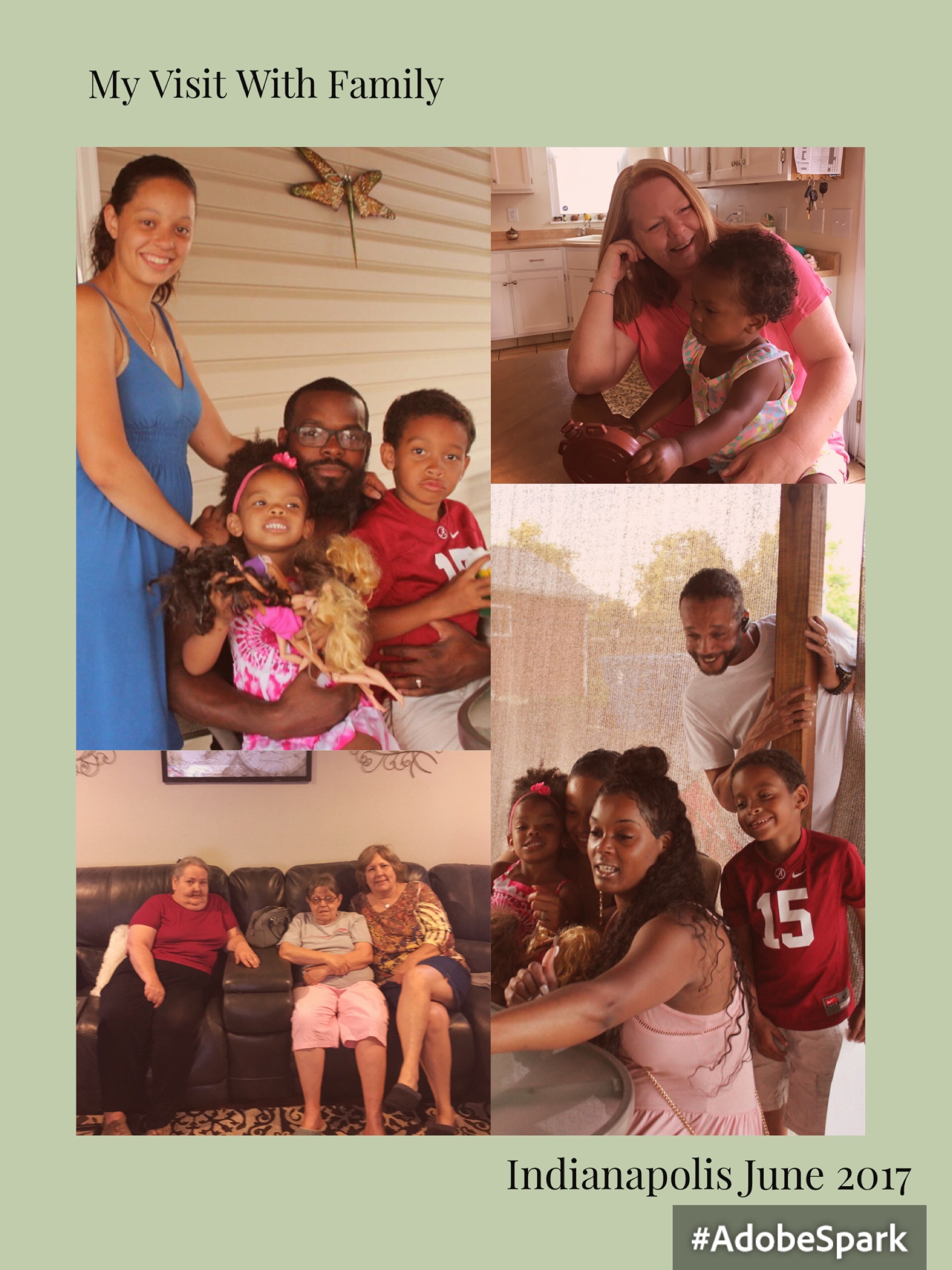
That was before… Now, I am resolved to visiting family and seeing people that are important in my heart. I have mended fences with my sisters in Indianapolis and I’m truly enjoying being with them. I am so proud of all of them. My niece, Johanna and her husband, Gerome, have a beautiful home and three gorgeous grandchildren. Years ago, I was sincerely concerned because her daughter, Taylor, I thought married too young. I had hoped that she would attend college but she married soon after high school to her high school sweetheart, Demone. Turns out they are terribly happy, have three children and just last year, bought a beautiful home. Demone graduated college and is working on his Masters degree- all while working full time to support his family. Did I mention that he is a very likable guy to boot?
I am concerned that while I am the oldest, I am in better health than my two younger sisters. Marie, Taylor’s grandmother and the middle sister, has undergone numerous back surgeries while Rickey, five years my junior, is a physical wreck. I am not prepared to deal with another loss.
My sister, Rickey (Erika) lives in a house I bought twelve years ago. Marie once lived there too and while she was there, the house was well maintained. Now, it needs thousands in maintenance and repairs. Rickey and her friend that she shares the house with can’t keep up with basic yard work and cleaning due to both their disabilities and because they have never owned a home and cannot connect the dots between property neglect and home value. It is frustrating to me because they could easily call plumbers, electricians, etc., but they don’t. I pay for all repairs so that is not the issue. I know they are both impoverished but it seems I may have to hire a property manager to keep up with maintenance. Yes, the house is a problem but it is still good to see everyone.
My next trip will have to be to see my son and grandsons.








 dottieriley