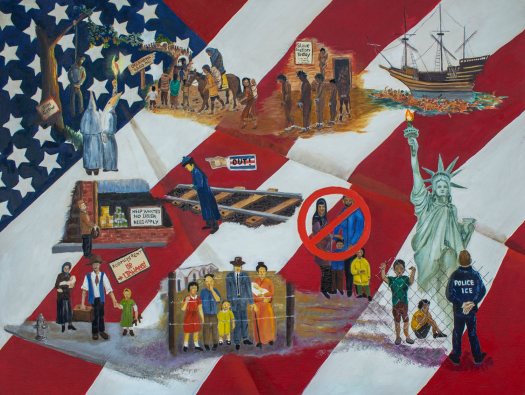
Our history of immigration is checkered, at best. The flood of settlers from Europe at the turn of the 17th Century destroyed thousands of Native Americans and their villages. We then imported thousands of slaves from Africa and other places but they and their American born offspring were not counted as citizens. The remaining Native American peoples were forcibly evicted from the Eastern coast in 1830 by Andrew Jackson and Martin Van Buren to make room for white settlers. The Indian Removal Act is better known as the Trail of Tears.
While the Civil War freed the slaves, African Americans continued to be treated as second class citizens supported by discriminatory policies in education, housing, and voting restrictions. Jim Crow practices served as a constant reminder that white Americans believed African Americans inferior.
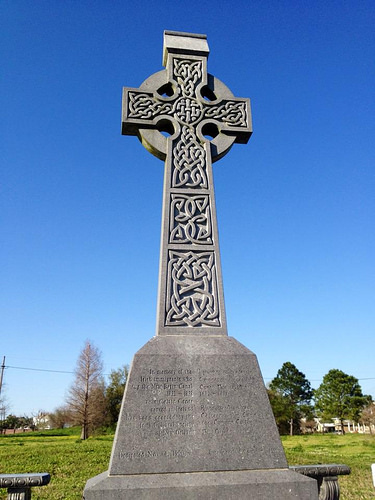
Irish and Italian immigrants were not wanted because they were often poor when they arrived on our shores, but mostly because white Protestant Americans feared the influx of Catholicism. The Irish were in fact, considered less “valuable” than slaves as laborers and were used for constructing the canal in New Orleans were the high rate of death made it too “expensive” to use slave labor. It is estimated that between 8,000-20,000 Irish laborers died building the canal.
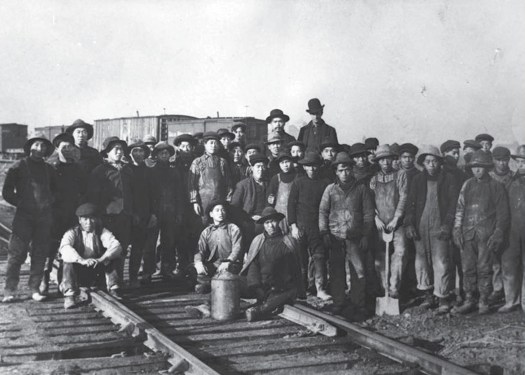
We then imported thousands of Chinese to build the Transcontinental Railway. (One of my previous posts.) When we no longer needed their labor, we sent them back to China and banned Chinese immigrants.
Our next target were the Japanese during WWII. To quote Wikipedia, “The internment of Japanese Americans in the United States during World War II was the forced relocation and incarceration in camps in the western interior of the country of between 110,000 and 120,000 people of Japanese ancestry, most of whom lived on the Pacific coast.”
Most were U.S. citizens, many were born in the U.S., owned property and businesses, all of which was confiscated by the government. Many were paid for their lost properties but the compensation was far less than 10% of the actual value. Call it what you may, they were imprisoned for the crime of being Japanese or of Japanese descent.
Two other noteworthy acts of discrimination occurred, both recently under the administration of Donald Trump. The first of these was the “Muslim Ban,” allegedly, to deter terrorists from reaching our country. Trump’s first attempts to ban Muslims were struck down by the courts, but after repeated attempts and by changing the language of the executive order, the last attempt succeeded. Strangely enough, Saudi Arabia was not on the list of banned immigrants despite 15 of the 19 persons who attacked our nation on 9/11 being citizens of that nation!
The most heinous act was the removal of over 2,500 children from South American families seeking asylum in our country. A court overruled the separation of families, but many parents were deported without their children and hundreds of children are waiting to be reunited. Worse, many of the children who were returned had body lice, were dirty, malnourished, were physically and sexually abused and severely traumatized. The photos of these children kept in chain-link cages is what inspired my painting, “Coming to America.” How could we do that?
Parents Deported Without Their Children.
I wrote a poem about immigration:
Unwanted Immigrants
Riley, O’Malley and O’Shea-
Remember when you were not welcome on these shores?
Ricco, Ferrari and Rizzo-
Remember when to you they closed the doors?
Wan, Wong, Chang and Bay-
Once you were cast out from this great land.
Kobayashi, Nakamura and Ito-
You were dispossessed; sent to internment camps.
Azikiwe, Akintola and Cisse,
Your owners took your names and gave you theirs,
Like property, you were auctioned off and sold,
Not white, not equal you were told.
Rodriguez, Gonzales and Lopez-
You are now much reviled and held at bay,
How quickly they forget not long ago,
It was they regarded as the foe. Ω
 dottieriley