Journalists Matter!

When talking about news reports, as soon as people start to throw out phrases like “fake news,” liberal brainwashing,” liberal media manipulation,” I suspect that the person knows nothing about journalism, journalism education, news reporting or news ethics. It is akin to calling doctors shamans because one does not understand the extent of medical training doctors receive or the Hippocratic oath that they take. The misconceptions in news reporting may in part be to the rise in television news commentators, most of whom are TV personalities and not trained journalists, not understanding the difference between news and opinion articles, and a president who denigrates journalists at every opportunity and calls them “the enemy of the people.” Trump, however, has both an agenda and a lack of understanding about the field.

Journalists are trained carefully in every genre published in newspapers and periodicals. A news article has specific criteria for both structure and content, and it must be factual and backed up by documents or reputable sources. (Donald Trump knows this well because he has in the past sued major newspapers for publishing what he alleged were false statements about him.) When newspapers publish incorrect facts, they either follow up with retractions or corrections.

Newspapers also print opinion pieces. Most newspapers place opinion pieces in a separate section. In some cases, the author’s name indicates it is an opinion piece as many of their authors are regular columnists.

Television news commentators are separate from printed news sources. While many commentators are trained journalists, personalities who host daily shows on news networks often offer more opinion than facts while local nightly news broadcasts usually lean more towards facts.
Code of Ethis
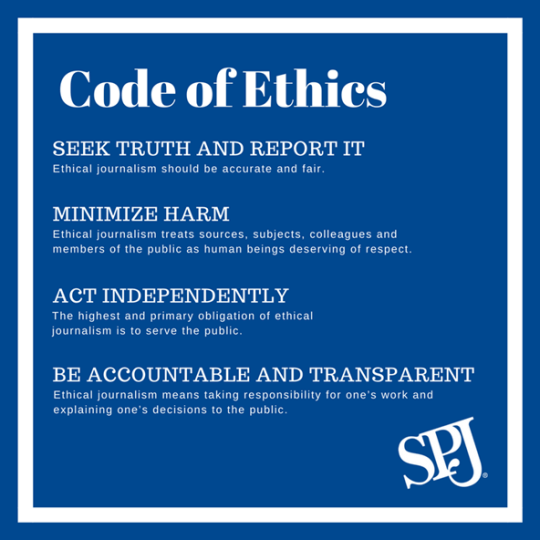
Society of Professional Journalists Code of Ethics

Journalists do not take a Hippocratic oath, but they are professionals guided by a code of ethics. The preamble states: “Members of the Society of Professional Journalists believe that public enlightenment is the forerunner of justice and the foundation of democracy. Ethical journalism strives to ensure the free exchange of information that is accurate, fair and thorough. An ethical journalist acts with integrity.

The Society declares these four principles as the foundation of ethical journalism and encourages their use in its practice by all people in all media: 1.) Seek Truth and Report It, 2.) Minimize Harm, 3.) Act Independently, and 4.)  Be Accountable and Transparent.”

You can find the Code of Ethics of the Society of Professional Journalism here: https://www.spj.org/ethicscode.asp

Stop denigrating journalists. Learn what it is that they do and why they do it. In 2017 alone, their commitment to truth caused over seventy journalists to be murdered or killed worldwide while reporting, covering an incident, or because of their status as a journalist. Journalists deserve better. They truly are the guardians of our democracy.

List of journalists killed in 2017: https://en.wikipedia.org/wiki/List_of_journalists_killed_in_2017

Note: I am not a journalist. I am a citizen who appreciates honest reporting.
Coming to America

37863169_2224779260869031_5184011430189334528_o
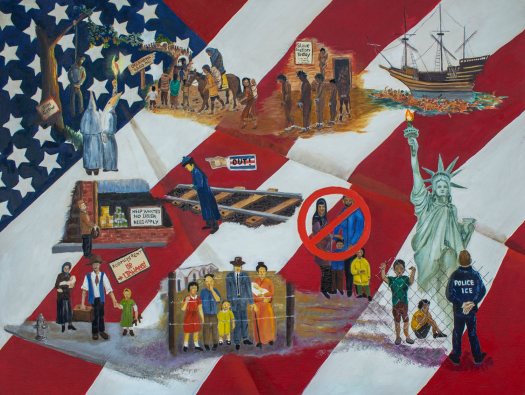
Coming to America, oil on canvas by artist, Dorothy J. Riley

Our history of immigration is checkered, at best. The flood of settlers from Europe at the turn of the 17th Century destroyed thousands of Native Americans and their villages. We then imported thousands of slaves from Africa and other places but they and their American born offspring were not counted as citizens. The remaining Native American peoples were forcibly evicted from the Eastern coast in 1830 by Andrew Jackson and Martin Van Buren to make room for white settlers. The Indian Removal Act is better known as the Trail of Tears.

While the Civil War freed the slaves, African Americans continued to be treated as second class citizens supported by discriminatory policies in education, housing, and voting restrictions. Jim Crow practices served as a constant reminder that white Americans believed African Americans inferior.

Irish and Italian immigrants were not wanted because they were often poor when they arrived on our shores, but mostly because white Protestant Americans feared the influx of Catholicism. The Irish were in fact, considered less “valuable” than slaves as laborers and were used for constructing the canal in New Orleans were the high rate of death made it too “expensive” to use slave labor. It is estimated that between 8,000-20,000 Irish laborers died building the canal.

Kilkenny cross-NOLA
Kilkenny Cross in New Orleans honoring the thousands of Irish immigrants who died building the canal.

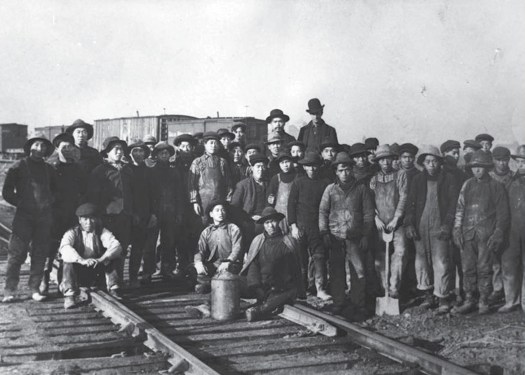
We then imported thousands of Chinese to build the Transcontinental Railway.  (One of my previous posts.) When we no longer needed their labor, we sent them back to China and banned Chinese immigrants.

Our next target were the Japanese during WWII. To quote Wikipedia, “The internment of Japanese Americans in the United States during World War II was the forced relocation and incarceration in camps in the western interior of the country of between 110,000 and 120,000 people of Japanese ancestry, most of whom lived on the Pacific coast.”

Most were U.S. citizens, many were born in the U.S., owned property and businesses, all of which was confiscated by the government.  Many were paid for their lost properties but the compensation was far less than 10% of the actual value. Call it what you may, they were imprisoned for the crime of being Japanese or of Japanese descent.

Two other noteworthy acts of discrimination occurred, both recently under the administration of Donald Trump. The first of these was the “Muslim Ban,” allegedly, to deter terrorists from reaching our country. Trump’s first attempts to ban Muslims were struck down by the courts, but after repeated attempts and by changing the language of the executive order, the last attempt succeeded. Strangely enough, Saudi Arabia was not on the list of banned immigrants despite 15 of the 19 persons who attacked our nation on 9/11 being citizens of that nation!

The most heinous act was the removal of over 2,500 children from South American families seeking asylum in our country. A court overruled the separation of families, but many parents were deported without their children and hundreds of children are waiting to be reunited. Worse, many of the children who were returned had body lice, were dirty, malnourished, were physically and sexually abused and severely traumatized. The photos of these children kept in chain-link cages is what inspired my painting, “Coming to America.”  How could we do that?

Parents Deported Without Their Children.

I wrote a poem about immigration:

Unwanted Immigrants

Riley, O’Malley and O’Shea-
Remember when you were not welcome on these shores?
Ricco, Ferrari and Rizzo-
Remember when to you they closed the doors?

Wan, Wong, Chang and Bay-
Once you were cast out from this great land.
Kobayashi, Nakamura and Ito-
You were dispossessed; sent to internment camps.

Azikiwe, Akintola and Cisse,
Your owners took your names and gave you theirs,
Like property, you were auctioned off and sold,
Not white, not equal you were told.

Rodriguez, Gonzales and Lopez-
You are now much reviled and held at bay,
How quickly they forget not long ago,
It was they regarded as the foe. Ω


The Yellow Peril

Transcontinental Rail Road
Chinese work group for the Great Northern Railway, c. 1909. (Photo courtesy of Royal British Columbia Museum)

My painting, “Coming to America,” depicts the worst prejudice and discrimination policies and practices in our nation’s history of immigration and expansion. Today, the nation’s focus is on brown people, but a century ago, our nation’s ire was directed at those of oriental descent.

THE YELLOW PERIL

Historians estimate that at any one time as many as 10,000 to 15,000 Chinese worked to construct the transcontinental rail road. Because records were poorly kept, that figure could be as high as 20,000.

“While industrial employers were eager to get this new and cheap labor, the ordinary white public was stirred to anger by the presence of this “yellow peril”. Despite the provisions for equal treatment of Chinese immigrants in the 1868 Burlingame Treaty, political and labor organizations rallied against the immigration of what they regarded as a degraded race and “cheap Chinese labor”.

Newspapers condemned the policies of employers, and even church leaders denounced the entrance of these aliens into what was regarded as a land for whites only. So hostile was the opposition that in 1882 the United States Congress eventually passed the Chinese Exclusion Act, which prohibited immigration from China for the next ten years. This law was then extended by the Geary Act in 1892. The Chinese Exclusion Act was the only U.S. law ever to prevent immigration and naturalization on the basis of race.

These laws not only prevented new immigration but also brought additional suffering as they prevented the reunion of the families of thousands of Chinese men already living in the United States (that is, men who had left China without their wives and children); anti-miscegenation laws in many Western states prohibited the Chinese men from marrying white women.

In 1924 the law barred further entries of Chinese; those already in the United States had been ineligible for citizenship since the previous year. Also, by 1924, all Asian immigrants (except people from the Philippines, which had been annexed by the United States in 1898) were utterly excluded by law, denied citizenship and naturalization, and prevented from owning land. In many Western states, Asian immigrants are even prevented from marrying Caucasians.” –Wikipedia, History of Chinese Americans

http://libraries.ucsd.edu/blogs/blog/geisel-library-exhibit-sheds-light-on-chinese-workers-who-built-transcontinental-railway/

For the Record: Yes, I am a Democrat

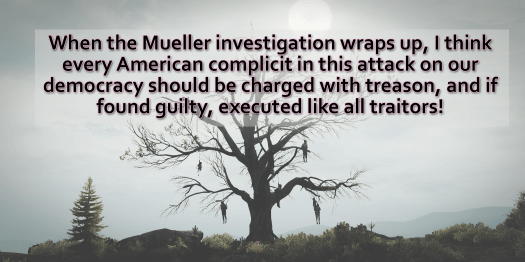
Traitors

Yes, I have always registered as a Democrat. I was last politically active during the late 1960-1970s when I protested: 1.) for racial equality 2.) for equal rights for women and 3.) against the war in Viet Nam. My politics did not blind me then any more than they do now. I am, after all, a Viet Nam era veteran and given my gender, know for sure that the Army did not draft me.

Apart from Richard Nixon and Watergate, before Trump, I stood behind every U.S. president regardless of their political party. I was honored to briefly meet President Gerald Ford (R) at Fort Bliss, Texas. My thinking was that while you might prefer the other candidate while they are on the campaign trail, once elected; they are our President and Commander-in-Chief. You will not find any posts denigrating former presidents on my Facebook timeline.

Trump is a different story altogether. He is arrogant, corrupt, a wrecking ball on the international socio-political landscape, a racist and a perpetual liar. His administration’s policies harm American citizens, especially our children.  Stripping the EPA of clean air and clean water regulations has disastrous consequences. (FYI: A Republican president started the EPA!) Cutting back on housing and food programs that are safety nets for the poor has dire consequences, as is taking funds from public education to fund private schools. Attacking the free press at every opportunity weakens our democracy through the erosion of credibility in legitimate news sources. The Washington Post has it right: “Democracy Dies in Darkness!” Trump’s trade wars are already showing harmful consequences to American farmers and companies. All of this without mentioning Trump’s racist and inhumane immigration policies.

Most egregious are Trump’s attacks against our Justice Department and the intelligence community, and his endless praise of Putin and Russia. The state of California’s economy is more substantial than Russia’s, so he cannot justify his actions by citing possible trade benefits to our country.

Do I despise Trump? Yes. Does my hatred of him color my opinion? Possibly, but it does not change the provable facts of the harms he is doing to the American people. Republicans respond with, “But his policies are working. Look at how great the stock market is doing!”  The wealthiest 10% of Americans own 84% of the market, so how does that benefit the average citizen?

All of that said (and I could say more), Trump is the first American president that I am entirely unable to support. If I cannot stand behind a single (Republican) president in my lifetime, does that mean being a “die-hard” Democrat makes me biased? I think not. I think it makes me a realist. Trump is a national and international disaster. I hope I live long enough to see history bear this out. Ω

https://www.reuters.com/article/us-usa-russia-summit/shock-as-trump-backs-putin-on-election-meddling-at-summit-idUSKBN1K601D


Government as Business

government

Business is the activity of making one’s living or making money by producing or buying and selling goods or services. Simply put, it is any activity or enterprise entered into for profit.

Government is authoritative direction or control and the complex of political institutions, laws and customs through which the function of governing is carried out. There is more within the Miriam-Webster definition similar in meaning, none of which end in “entered into for profit.”

Our government is not a business and was never meant to profit. In fact, the Preamble to the Constitution reads, “We the People of the United States, in order to… establish Justice, insure domestic Tranquility, provide for the common defense, promote the general Welfare, and secure the Blessings of Liberty to ourselves and our Posterity….”

At Gettysburg, Lincoln redefined the Civil War as a struggle not just for the Union, but also for the principle of human equality with his words, “…that this nation, under God, shall have a new birth of freedom — and that government of the people, by the people, for the people, shall not perish from the earth.”  Government should promote the general welfare of all persons equally, and promoting the general welfare comes at a cost.

Our social and economic policies remained a backdrop of  government and did not come to the forefront until Warren G. Harding. Harding promoted pro-business and anti-immigration policies, and enacted deep tax cuts for big business and the wealthy. (Sound familiar?) When Harding died in office, Calvin Coolidge inherited his scandal-ridden office during a period of pronounced materialism and excess. Coolidge succeeded in ridding the administration of corruption, but his economic policies did little to boost the economy or alleviate the suffering of the average citizens. The tax increase that he introduced in 1929 was too late to avert the crash of the stock market, which at the start of Herbert Hoover’s administration, culminated in the Great Depression .

Hoover’s nationalistic policies only worsened the Great Depression. He was unable to lessen the severity and suffering of millions Americans. That took Franklin D. Roosevelt’s New Deal spelled out by the three basic principles of relief, recovery and reform through programs designed to create jobs and most importantly, renew hope. Some of these programs included the Works Progress Administration, the Social Security Administration, and aid to farmers and migrant workers.

While Roosevelt’s programs were successful, poverty continued to impact large swaths of our citizens and slowed the growth of our national economy. The greatest and most far-reaching achievements in improving the lives of American citizens and boosting the economy came thirty years later with the introduction of Lyndon B. Johnson’s “War on Poverty,” seen as a continuation of Roosevelt’s New Deal. The legacy of the War on Poverty policy initiative continues to exist through such federal programs as Head Start, Volunteers in Service to America (VISTA), TRiO (eight education programs administered through the Department of Education), and Job Corps. Other programs include Medicaid and Medicare.

While critics pointed at the growing number social welfare policies and safety net programs and labelled America a “welfare state,” what could not be denied was the overall improvement in the quality of life for millions of Americans and the improvements in the national economy as measured by the growth domestic product (GDP).  Over the years, social and political events created fluctuations in the GDP growth rate but placing the welfare of citizens first has always worked best for our people, our economy and our nation.

The current economic policies under Donald Trump echo Harding’s years in office. Once again, we witness pro-business and anti-immigration policies, and deep tax cuts for big business and the wealthy. Other similarities to Harding’s administration are the evidences of materialism, excess and the extreme corruption of our politicians. The deficits are made up eliminating some of the social welfare policies created to protect the poorest and most vulnerable Americans, and through deep cuts into other programs that serve as a safety net to millions of citizens.

How do we as American citizens remind our politicians that our nation is a government of the people, by the people and for the people and not a business? Government should serve the people, not corporations or the wealthy. We have become a plutocracy instead of a democracy. We buy into the business model of government even though the two words don’t belong together in the same sentence.

Barrack Obama guided our nation out of the 2008 Financial Crisis but most of the safe-guards put into place to prevent another from occurring have been lifted. The disparity in wealth is increasing while the middle class is shrinking. If history bears out, get ready for a crash bigger than the Great Depression.  We should pray for another Franklin Roosevelt or Lyndon B. Johnson although that may not be enough. If we cannot learn from what happened ten years ago, how can we take to heart the lessons of nearly 90 years past?


Note: Homelessness is on the rise for the first time since 2010.  In 2017, nearly 554,00 people were homeless. Of those, over 184,00 were families with children and over 40,000 were veterans. In 2017, ‘Feeding America’ network reported, “41 million Americans struggle with hunger, a number nearly equal to the 40.6 million officially living in poverty.” This administration believes that despite these statistics, cutting social safety net programs will improve our national economy and that these cuts are necessary and reflect good business practices.