
Recently, I saw a meme about the 72 people shot in Chicago. I cannot quote it verbatim, but it said that they were not brown people trying to cross the border illegally; that they were black American citizens in Chicago so LIBERALS can go back to not caring.
While the entire point of the meme was to besmirch Democrats/liberals, what struck me was how something as terrible as inner-city violence was used not to express outrage over conditions within big cities or compassion for those who lost a son, a brother or father during that bloody weekend, but only as an attack on ‘liberals!’ As a social worker, I worked in inner cities, and I have some understanding of how people living in these pockets of poverty perceive the world around them and how they feel.
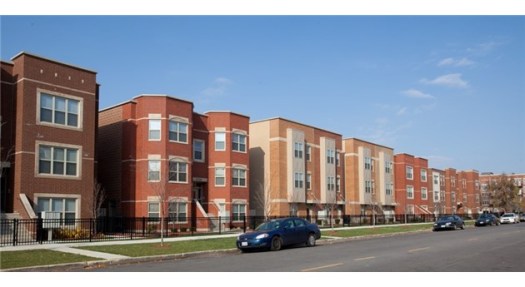
Chicago has the third largest public housing agency in the country. They have come a long way toward removing the huge apartment complexes that housed hundreds of families to invest in two and three unit buildings. Building smaller units has dropped the people to space ration from 75-90 persons per acre to 40-50 persons. An acre as a unit of measure may sound vague, and as offering a point of reference, a square acre measures 208.7 feet x 208.7 feet, or at 50 people per acre, each person has the equivalent of a little more than four feet of living space!
Housing units go on for blocks and stores, and other businesses are rarely located nearby. Residents of these Chicago neighborhoods have fewer privately owned vehicles, but the city has a great public transit network. Can you imagine bringing home a week’s worth- let alone a month’s worth of groceries on a bus? People less likely able to afford it are forced to pay friends, taxis, and ubers for rides to shop for necessities like food or school clothing or to keep medical appointments.
People unfamiliar with these populations erroneously assume that these families subsist solely on welfare. Most of the heads of households are employed albeit at minimum wage or low-paying jobs. The reduced wage makes them eligible for housing assistance, and many families cannot get by without subsidized daycare, Food Stamps, S.N.A.P., government-subsidized health insurance programs like CHIP and other safety net programs. Families that subsist on Aid to Dependent Children programs are worse off.
Education is the path out of dire poverty, and Chicago prides itself in a public school system that takes advantage of every resource possible from hiring good teachers, offering various after-school programs, day trips to expose inner-city children to other cultures and experiences, and to a social media campaign. What competes against all of their efforts is innercity gangs. What gives the gangs such a strong grip on Chicago residents?
Living conditions are comprised of physical and emotional space, and the absence of hope dominates the emotional space. They have nothing to look forward to, and their living conditions are not likely to improve. Drugs, guns, and gangs rule the streets. These communities have troubled relationships with Chicago P.D. They see police commit violence against minorities and witness black men killed at an increasing rate. They feel marginalized by the rest of society and fear that their voices are not heard. They are often degraded and shamed by employees of the agencies they need most to survive and are treated like welchers. They face an endless cycle of poverty, feel hopeless and helpless, and that sense of helplessness is what encourages young men to join gangs. Gangs represent a form of power.
Gang wars are about turf. Gangs encroach on each other’s neighborhoods or “turf” to extend their power and to increase revenues. That gang retaliates by killing their invaders, and the invaders retaliate by killing more of their rivals creating an endless cycle of killings.
We cannot impact inner-city murder rates without changing the environment. We must first restore hope and opportunities. The Trump administration is cutting desperately needed aid such as housing assistance, CHIP, food stamps, etc., which will only make living conditions direr and increase the helplessness that drives young people into a life of crime. Restore assistance to working low-income families and create opportunities to escape the cycle of violence. That will do more to curb violence than calling out the National Guard. Ω
 dottieriley